
01 / SETTING
A castle within the loch
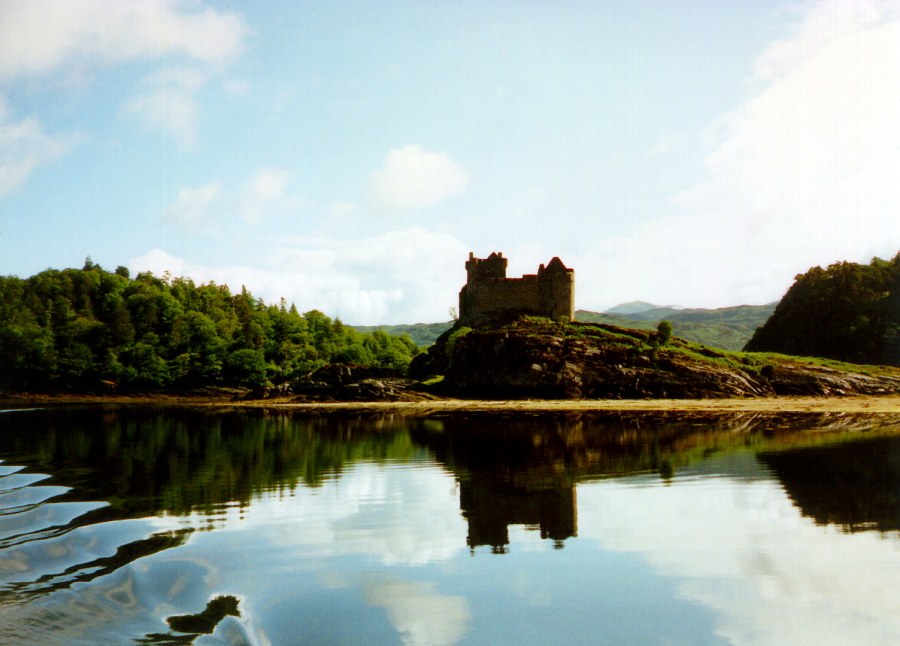
The fortress crowns Eilean Tioram, a small tidal island commanding the mouth of Loch Moidart and views towards Eilean Shona.
Discover a dramatic ruined fortress on the tidal island of Eilean Tioram, where Loch Moidart, Highland history and the legacy of Clanranald meet in one unforgettable landscape.
Castle Tioram occupies a rocky tidal island at the meeting point of Loch Moidart and the River Shiel. Its great curtain wall follows the outline of the island, creating a fortress that feels inseparable from the surrounding water and mountains.
The castle became a major stronghold of the Macdonalds of Clanranald and an important centre of power on Scotland’s western seaboard. The surviving structure reflects centuries of building, adaptation and Highland history.
The name “Tioram” is associated with the Gaelic word for “dry”, referring to the island’s connection to the mainland when the tide reveals the sandy causeway.
A compact guide to the landscape, architecture and visitor experience before you plan a private Highland journey.
The fortress crowns Eilean Tioram, a small tidal island commanding the mouth of Loch Moidart and views towards Eilean Shona.
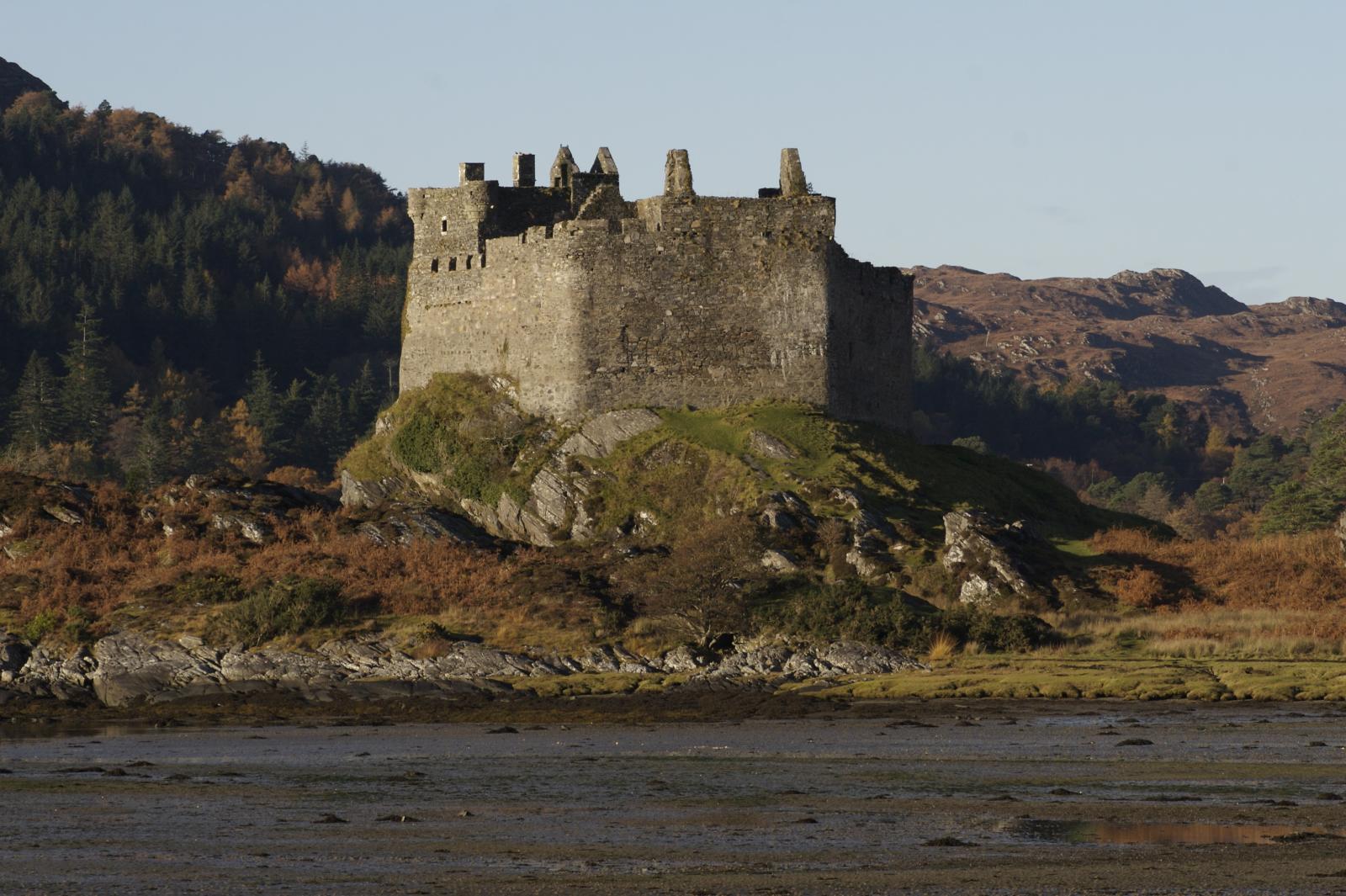
The massive, roughly five-sided curtain wall follows the natural rocky perimeter, with later towers and domestic ranges inside.
Castle Tioram served as an important stronghold and administrative centre for the Macdonalds of Clanranald.
The castle and island are nationally protected. Visitors may enjoy the exterior setting, but the unsafe interior is not accessible.
Castle Tioram’s surviving walls preserve the outline of changing power, domestic life and conflict across the western Highlands.
The main defensive enclosure is believed to date largely from the thirteenth century and was shaped around the summit of the tidal island.
The castle appears in a charter from 1372, confirming its place in the political and territorial history of the region.
Towers, halls and domestic ranges were added and altered, transforming the enclosure into a substantial clan residence.
The castle was burned during the Jacobite rising and remained unoccupied, gradually becoming the atmospheric ruin seen today.
This is a remote, unsupervised historic landscape rather than a staffed attraction. Conditions, tides and personal safety must guide every visit.
Cross only when the causeway is safely exposed. Check local tide and weather information, keep clear of unstable masonry, follow all warning signs and do not enter the castle interior.
Castle Tioram lies far from the pace of the city. A pre-arranged private journey lets you enjoy the scenery, avoid the pressure of unfamiliar single-track roads and build the day around suitable conditions.
The castle changes character with the angle, weather and tide—from an isolated island fortress to a dramatic landmark reached across the exposed shore.


The final itinerary depends on pickup point, season, weather, tides and available time. These regional ideas can be discussed when you request a quote.
Add time for peaceful waterside scenery and elevated views around the wider Loch Shiel landscape.
Combine the journey with one of the Highlands’ most recognised historic landscapes, subject to route and timing.
Extend the day through remote west-coast landscapes, viewpoints and small Highland communities where practical.